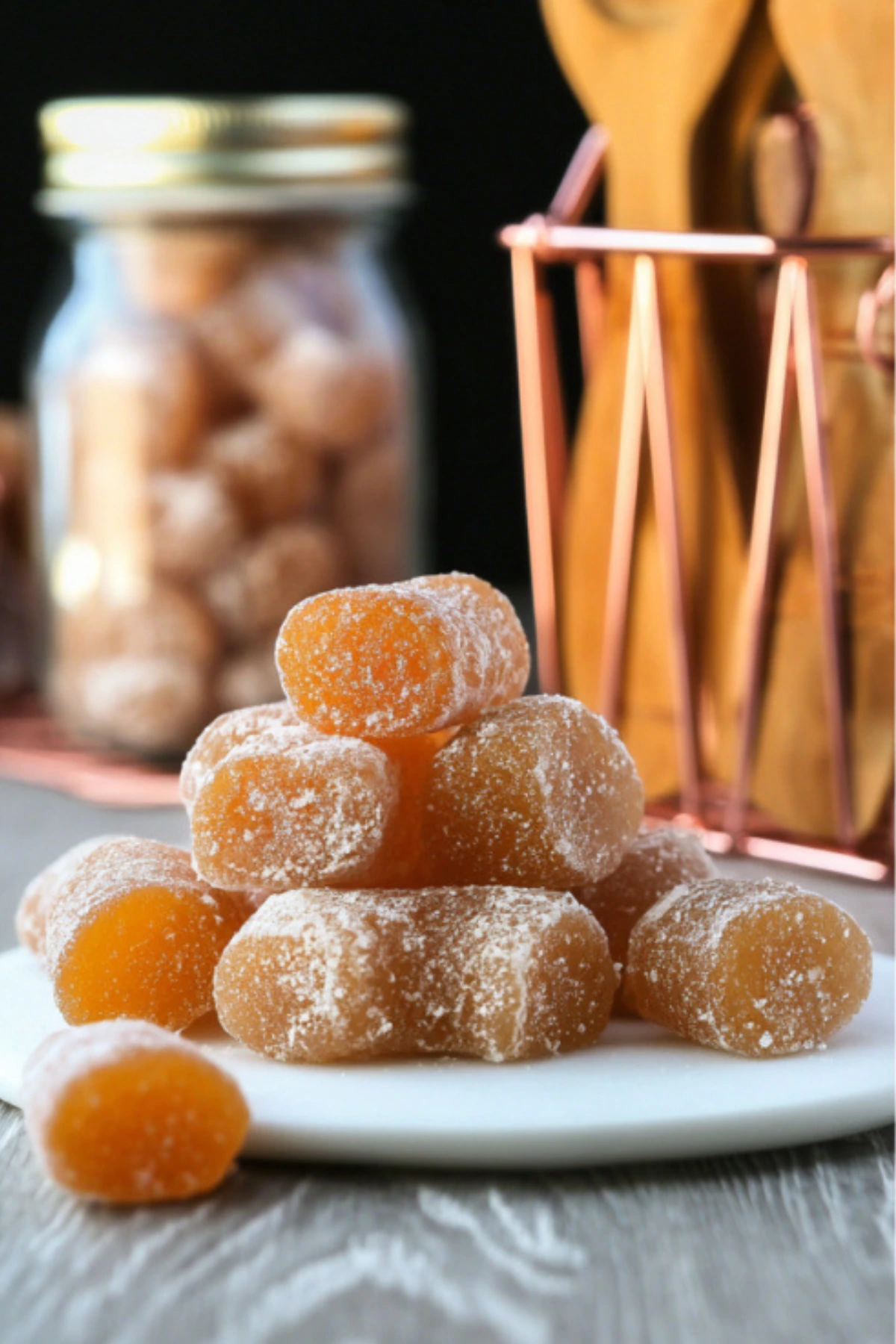
There’s something magical about making your own ginger chews at home. Last winter, when my daughter was battling morning sickness, I discovered that homemade ginger chews were not only more effective than store-bought versions but also incredibly satisfying to make. The warm, spicy aroma filling my kitchen reminded me why I fell in love with cooking in the first place.
These easy ginger chews recipe results are perfect for anyone dealing with nausea, motion sickness, or simply craving that perfect balance of sweet and spicy. Unlike commercial versions that often contain artificial flavors and preservatives, this homemade ginger chews recipe lets you control every ingredient.
Why Make Your Own Ginger Chews?
Making ginger chews from scratch gives you complete control over the ingredients. Store-bought versions can be expensive and often contain high fructose corn syrup or artificial flavors. When you make them yourself, you know exactly what’s going into your body.
I started making these when my husband was going through chemotherapy. The doctor recommended ginger for nausea, but the chimes ginger chews were too sweet for his taste. These homemade ginger chews for nausea allowed me to adjust the sweetness and ginger intensity to his preferences.
The best part? You probably have most ingredients in your pantry already. Fresh ginger, sugar, and water are the basic trio that creates these chewy, satisfying treats.
Essential Ingredients for Perfect Ginger Chews
Fresh Ginger: The Star of the Show
Always use fresh ginger root for the best flavor. I’ve tried powdered ginger, but it simply doesn’t deliver the same punch. Look for ginger with smooth, tight skin and avoid pieces that feel soft or wrinkled.
When grating ginger, I use a microplane grater for the finest texture. This ensures even distribution throughout your chews and prevents any fibrous pieces from creating an unpleasant texture.
Sugar: Your Sweetness Base
Regular granulated sugar works perfectly for this recipe. The sugar doesn’t just add sweetness – it’s crucial for achieving that perfect chewy texture. As the mixture cooks, the sugar caramelizes slightly, adding depth to the flavor.
Water: The Binding Agent
Water helps dissolve the sugar and creates the syrup base. The amount seems small, but it’s precisely calibrated to create the right consistency. Too much water and your chews won’t set properly; too little and they’ll burn before achieving the right texture.

The Complete Easy Ginger Chews Recipe
Ingredients:
- 3-4 tablespoons fresh ginger, finely grated
- 2 cups water
- 1/4 cup honey
- 3/4 cup evaporated cane juice sugar or raw cane sugar
- Cornstarch or tapioca starch for dusting
Instructions:
- Create ginger decoction: In a small saucepan, bring the grated ginger and 2 cups water to a low boil. Continue boiling until only 1 cup of liquid remains. This concentrates the ginger flavor beautifully.
- Strain the mixture: Remove from heat and strain the ginger decoction through a fine-mesh strainer, pressing the ginger solids to extract maximum flavor. Discard the ginger pulp and return the strained liquid to the saucepan.
- Add sweeteners: Add the sugar and honey to the ginger decoction. Bring to a boil, stirring constantly until the sugar completely dissolves.
- Simmer to hard-ball stage: Once dissolved, reduce heat to low and simmer patiently. This takes close to an hour to reach the hard-ball stage (260-265°F on a candy thermometer). Keep watching to prevent frothing or boiling over.
- Test without thermometer: If you don’t have a candy thermometer, use the cold water test. Drop a teaspoon of the mixture into ice-cold water. It should form a firm blob that holds its shape when lifted but isn’t crunchy when pressed.
- Pour and cool: Line a tray with parchment paper. Pour the hot mixture onto the parchment without spreading – let it naturally spread on its own.
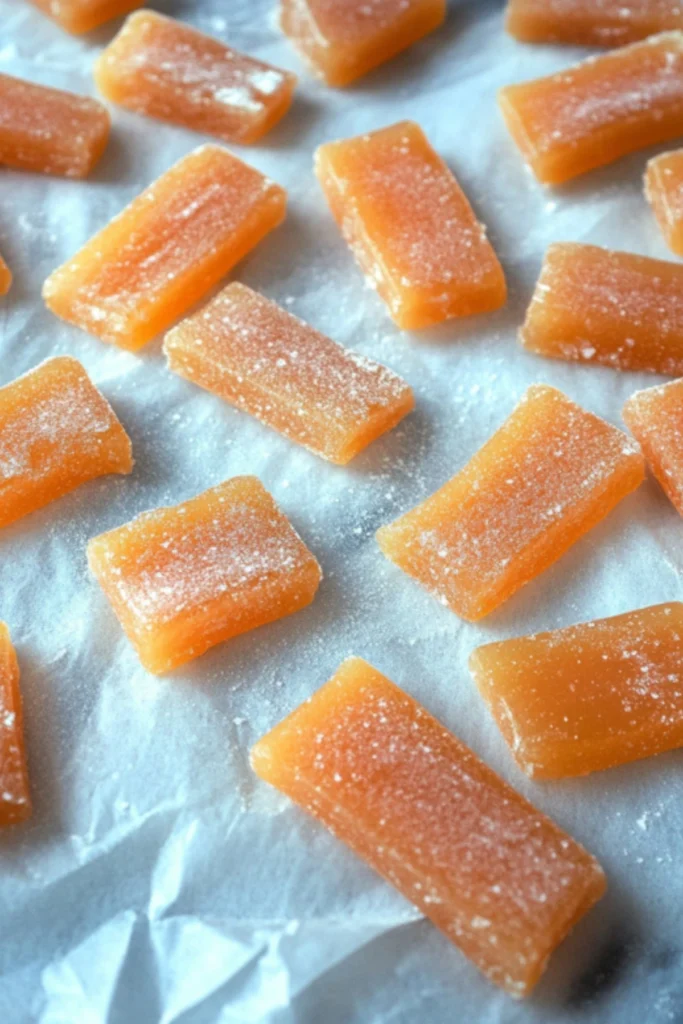
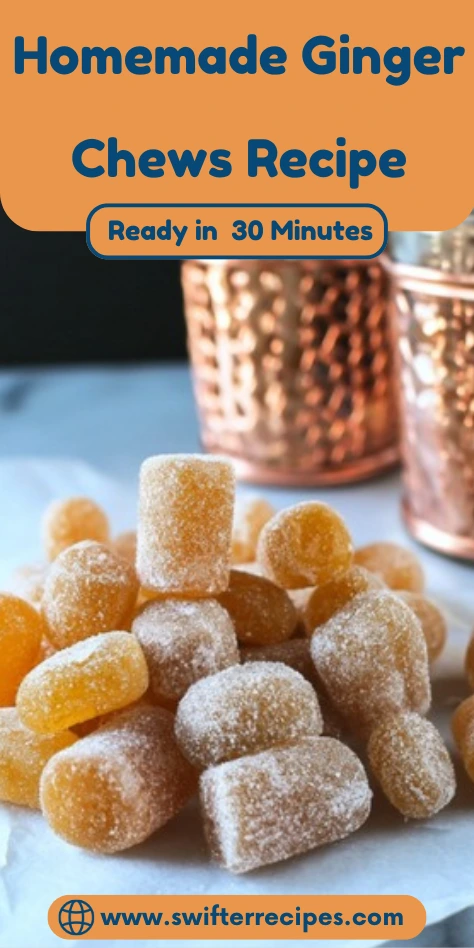
- Rest and cut: Allow the candy to cool for 30-60 minutes. Dust the surface with cornstarch, then carefully peel it off the parchment in one pliable sheet. Dust the other side with cornstarch and cut into small strips using a sharp, starch-dusted knife or pizza cutter.
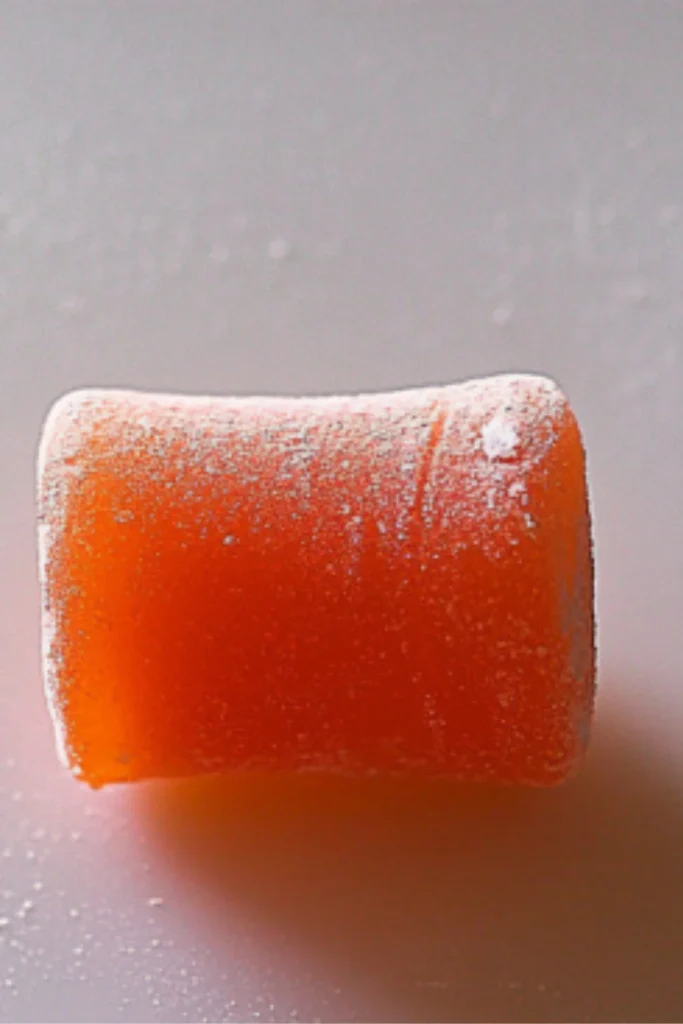
- Final preparation: Dust each piece with starch and individually wrap in parchment for best storage, or roll into gum drop shapes. Store at room temperature for up to 6 weeks or refrigerate for up to 4 months.
How to Make Ginger Chews Without Sugar
For those watching their sugar intake, creating ginger chews without sugar is absolutely possible. I’ve experimented with several natural sweeteners with varying degrees of success.
Honey-Based Ginger Chews
Replace the sugar with 3/4 cup honey and reduce the water to 1/4 cup. The cooking time will be slightly longer, and the final texture will be softer than traditional sugar-based chews.
Maple Syrup Alternative
Use 3/4 cup pure maple syrup instead of sugar and eliminate the water entirely. These chews have a lovely maple undertone that complements the ginger beautifully.
Stevia Option
For a truly low-calorie version, use 2 tablespoons of stevia powder with the full 1/2 cup of water. Add 2 tablespoons of cornstarch to help achieve the proper texture. This how to make ginger chews without sugar method works well for diabetics or anyone reducing their sugar intake.
Creating Ginger Chews with Honey
How to make ginger chews with honey is one of my most requested variations. Honey adds a floral sweetness that pairs beautifully with ginger’s heat.
Honey Ginger Chews Recipe:
- 1 cup fresh ginger, finely grated
- 3/4 cup honey
- 1/4 cup water
- 1 tablespoon lemon juice (optional)
The process remains the same, but honey burns more easily than sugar. Keep the heat at medium-low throughout the cooking process and stir more frequently. The mixture will foam more than the sugar version, which is completely normal. This how to make ginger chews with honey approach creates a softer, more mellow candy.
Expert Tips for Perfect Homemade Ginger Chews
Adjusting Ginger Strength
The beauty of this recipe lies in customizing the ginger intensity to your taste preferences:
- Use 2 tablespoons of ginger for a very mild ginger flavor – perfect for children or those new to ginger
- Use 3 tablespoons of ginger for a well-balanced ginger flavor – the sweet spot for most people
- Use 4 tablespoons of ginger for a strong and zesty ginger candy – ideal for serious ginger lovers
Cooking Temperature Matters
Patience is absolutely crucial when making these chews. The mixture needs a full hour of gentle simmering to reach the proper hard-ball stage at 260-265°F. Rushing this process by increasing the heat will cause the mixture to burn or boil over, ruining your batch.
Testing Without a Thermometer
The cold water test is foolproof when you don’t have a candy thermometer. Once your mixture thickens to honey consistency, test every 4 minutes. You’re looking for a firm blob that maintains its shape when lifted from ice water but remains pliable when pressed between your fingers.
Storage Solutions
These chews maintain their perfect texture when stored properly. Room temperature storage works for up to 6 weeks, while refrigeration extends their life to 4 months. Individual parchment wrapping prevents sticking and maintains the ideal chewy texture.
Troubleshooting Common Issues
Chews Are Too Hard
If your chews turned out harder than expected, you probably cooked the mixture too long. Next time, test the consistency more frequently and remove from heat as soon as it reaches the taffy stage.
Chews Won’t Set
Undercooked chews remain sticky and won’t hold their shape. Return the mixture to the stove and cook for an additional 5-10 minutes, testing frequently.
Ginger Flavor Too Intense
If the ginger flavor is overwhelming, add a tablespoon of honey or a squeeze of lemon juice to balance the heat. You can also reduce the ginger to 3/4 cup next time.
Flavor Variations to Try
Lemon Ginger Chews
Add 2 tablespoons of fresh lemon juice and 1 teaspoon of lemon zest for a bright, citrusy twist. The lemon helps balance the ginger’s intensity.
Turmeric Ginger Chews
Include 1 teaspoon of turmeric powder for added anti-inflammatory benefits. The turmeric adds a beautiful golden color and earthy flavor that complements ginger perfectly. These make excellent additions to any natural wellness routine, especially when combined with other mineral-rich ingredients like pink salt, which can support metabolism and hydration as explained in our pink salt weight loss recipe.
Crystallized Ginger Addition
Fold in 1/4 cup of chopped crystallized ginger just before pouring. This adds textural interest and intensifies the ginger flavor.
Health Benefits of Homemade Ginger Chews
Nausea Relief
Ginger has been used for thousands of years for treating nausea, with various preclinical and clinical studies evaluating it as an effective and safe treatment for nausea and vomiting in pregnancy and chemotherapy contexts. Research shows that ginger contains chemicals that might reduce nausea and swelling, working in the stomach and intestines while also helping the brain and nervous system control nausea.
These homemade ginger chews for nausea are particularly effective because you control the ginger concentration. Some research has shown that ginger and its compounds may increase digestive responsiveness and speed stomach emptying, which may reduce nausea. The National Center for Biotechnology Information provides extensive research on ginger’s medicinal properties for those interested in the scientific evidence.
Anti-Inflammatory Properties
Fresh ginger contains gingerol, which has powerful anti-inflammatory and antioxidant effects according to research, with studies showing ginger extracts exhibit analgesic and potent anti-inflammatory properties. Johns Hopkins Medicine reports that ginger contains over 400 natural compounds, and some of these are anti-inflammatory.
Suppose you’re interested in other ginger preparations that maximize health benefits. In that case, our lemon ginger ferment recipe creates a probiotic-rich drink that combines ginger’s anti-inflammatory properties with beneficial bacteria for digestive health.
For comprehensive information on ginger’s anti-inflammatory effects, the PMC database contains peer-reviewed studies showing how ginger modulates immune responses. Ginger’s anti-inflammatory properties work through immune response modulation during the cellular phase.
Digestive Support
Regular consumption of ginger can help with digestion and reduce bloating. Keep a few chews handy after heavy meals. The Healthline research compilation provides evidence-based information on ginger’s digestive benefits.
Ginger contains nutrients and bioactive compounds that may have a range of benefits for your body and brain, including treating nausea, supporting digestion, and managing blood sugar. However, more research continues to confirm these traditional uses with modern scientific methods.
Making Large Batches
This recipe doubles and triples easily. I often make large batches during ginger season when fresh ginger is most affordable. The cooking time increases proportionally, so plan accordingly.
Store extra batches in the freezer. They thaw quickly at room temperature and taste just as fresh as the day you made them.
Comparing Homemade vs Store-Bought
Cost Comparison
Making ginger chews at home costs approximately 60% less than buying premium brands. Chimes ginger chews and similar commercial brands can cost $3-4 per small package, while homemade versions cost under $1 per equivalent amount. When searching for ginger chews near me, you’ll find that most stores carry limited varieties at premium prices.
Ingredient Control
Commercial ginger chews often contain corn syrup, artificial flavors, and preservatives. Homemade versions contain only what you choose to include.
Customization Options
Store-bought chews come in limited flavors and sweetness levels. Homemade versions can be customized to your exact preferences.
Alternative Preparation Methods
Using Tapioca Starch
Some readers ask about ginger chews recipe tapioca starch for those avoiding corn products. Replace the cornstarch dusting with tapioca starch for the same anti-sticking properties. This substitution works perfectly and doesn’t affect the final texture or taste.
Slow Cooker Method
For hands-off preparation, combine all ingredients in a slow cooker on low for 2-3 hours, stirring every 30 minutes. The texture will be slightly different but equally delicious.
Dehydrator Option
Pour the mixture onto dehydrator sheets and dry at 135°F for 6-8 hours. This creates a firmer, longer-lasting chew.
Gift Ideas and Presentation
Homemade ginger chews make wonderful gifts. Package them in small mason jars with handwritten labels. Include a note about their nausea-fighting properties for new mothers or travelers.
For holiday gifts, create flavor variety packs with different combinations. Lemon-ginger, honey-ginger, and traditional sugar versions offer something for everyone.
Seasonal Variations
Winter Warming Blend
Add a pinch of cinnamon and cloves during cold months. These warming spices complement ginger’s heat beautifully.
Summer Cooling Version
Include fresh mint or a splash of lime juice for a refreshing summer treat that still provides ginger’s benefits.
Teaching Kids to Make Ginger Chews
This easy ginger chews recipe is perfect for teaching children basic cooking skills. The simple ingredient list and clear steps make it approachable for young cooks.
Start with less ginger for children’s palates, gradually increasing as they develop a taste for the spice. The process teaches patience, measurement skills, and the satisfaction of creating something from scratch.
FAQs
Can I use powdered ginger instead of fresh ginger?
Fresh ginger is always best for this recipe. Powdered ginger lacks the moisture and intensity that creates the perfect texture and flavor. If you must substitute, use 1 tablespoon of powdered ginger for every 3 tablespoons of fresh, but expect a different taste and texture.
Why do my ginger chews turn out too hard?
Hard ginger chews usually result from overcooking the mixture past the hard-ball stage. The temperature should stay between 260-265°F. If you don’t have a thermometer, test more frequently with the cold water method to prevent overcooking.
How can I make my ginger chews softer?
For softer chews, cook the mixture to a slightly lower temperature (250-255°F) or add an extra tablespoon of honey to the recipe. The honey creates a more pliable texture than sugar alone.
Can I double or triple this recipe?
Yes, but be careful with timing. Larger batches take longer to reach the proper temperature and require more frequent stirring. Use a larger, heavy-bottomed saucepan to prevent scorching.
What’s the best way to store ginger chews?
Individual parchment wrapping prevents sticking and maintains texture. Store wrapped chews in an airtight container at room temperature for 6 weeks or refrigerate for up to 4 months.
Can I freeze ginger chews?
Yes, freeze individually wrapped chews for up to 6 months. They thaw quickly at room temperature and maintain their texture perfectly.
Can I add other flavors to my ginger chews?
Absolutely! Add 1 teaspoon of vanilla extract, lemon zest, or a pinch of cinnamon during the final cooking stage. Turmeric adds beautiful color and health benefits.
Making this homemade ginger chews recipe connects us to traditional remedies while providing modern convenience. Whether you’re dealing with morning sickness, motion sickness, or simply love the warming sensation of ginger, these chews offer a natural, effective solution.
The beauty of this recipe lies in its simplicity and adaptability. Start with the basic version, then experiment with different sweeteners, spice combinations, and textures until you find your perfect blend.
Remember that cooking is about more than following recipes – it’s about creating memories, caring for loved ones, and finding joy in simple pleasures. These ginger chews represent all of that and more.
Ready to try this recipe? I’d love to see your creations! Pin this recipe to your Pinterest boards and share your variations in the comments. Did you try the honey version? How about adding turmeric? Your experiences help other home cooks perfect their own ginger chews.
Love this recipe? Pin it on Pinterest so you can find it easily next time
Print
Homemade Ginger Chews Recipe: 7 Steps to Motion Sickness Relief
- Total Time: 1 hour 10 minutes
- Yield: 30 chews 1x
Description
Warm, spicy, and naturally soothing, these homemade ginger chews are perfect for nausea, motion sickness, or simply enjoying a sweet-spicy treat. Made with fresh ginger, sugar, and honey, they’re more effective and customizable than store-bought versions.
Ingredients
- 3–4 tablespoons fresh ginger, finely grated
- 2 cups water
- 1/4 cup honey
- 3/4 cup evaporated cane juice sugar or raw cane sugar
- Cornstarch or tapioca starch for dusting
Instructions
- In a small saucepan, bring grated ginger and 2 cups water to a boil. Reduce until 1 cup of liquid remains.
- Strain through a fine-mesh strainer, pressing ginger to extract flavor. Discard pulp and return liquid to saucepan.
- Add sugar and honey to the liquid. Stir constantly until sugar dissolves completely.
- Reduce heat to low and simmer until the mixture reaches hard-ball stage (260–265°F), about 1 hour.
- Test readiness by dropping a small amount into cold water—it should form a firm, pliable blob.
- Line a tray with parchment paper and pour mixture on it. Let it spread naturally and cool for 30–60 minutes.
- Dust surface with starch, peel off parchment, dust other side, and cut into strips or roll into shapes.
- Wrap each piece in parchment paper. Store at room temperature for up to 6 weeks or refrigerate for up to 4 months.
Notes
For stronger ginger flavor, use 4 tablespoons of ginger. For milder taste, reduce to 2 tablespoons. Customize with lemon, turmeric, or maple syrup variations. Always test candy consistency to avoid under- or over-cooking.
- Prep Time: 10 minutes
- Cook Time: 1 hour
- Category: Natural Remedy
- Method: Stovetop
- Cuisine: Homemade Wellness
Nutrition
- Serving Size: 1 chew
- Calories: 18
- Sugar: 3g
- Sodium: 1mg
- Fat: 0g
- Saturated Fat: 0g
- Unsaturated Fat: 0g
- Trans Fat: 0g
- Carbohydrates: 4g
- Fiber: 0g
- Protein: 0g
- Cholesterol: 0mg