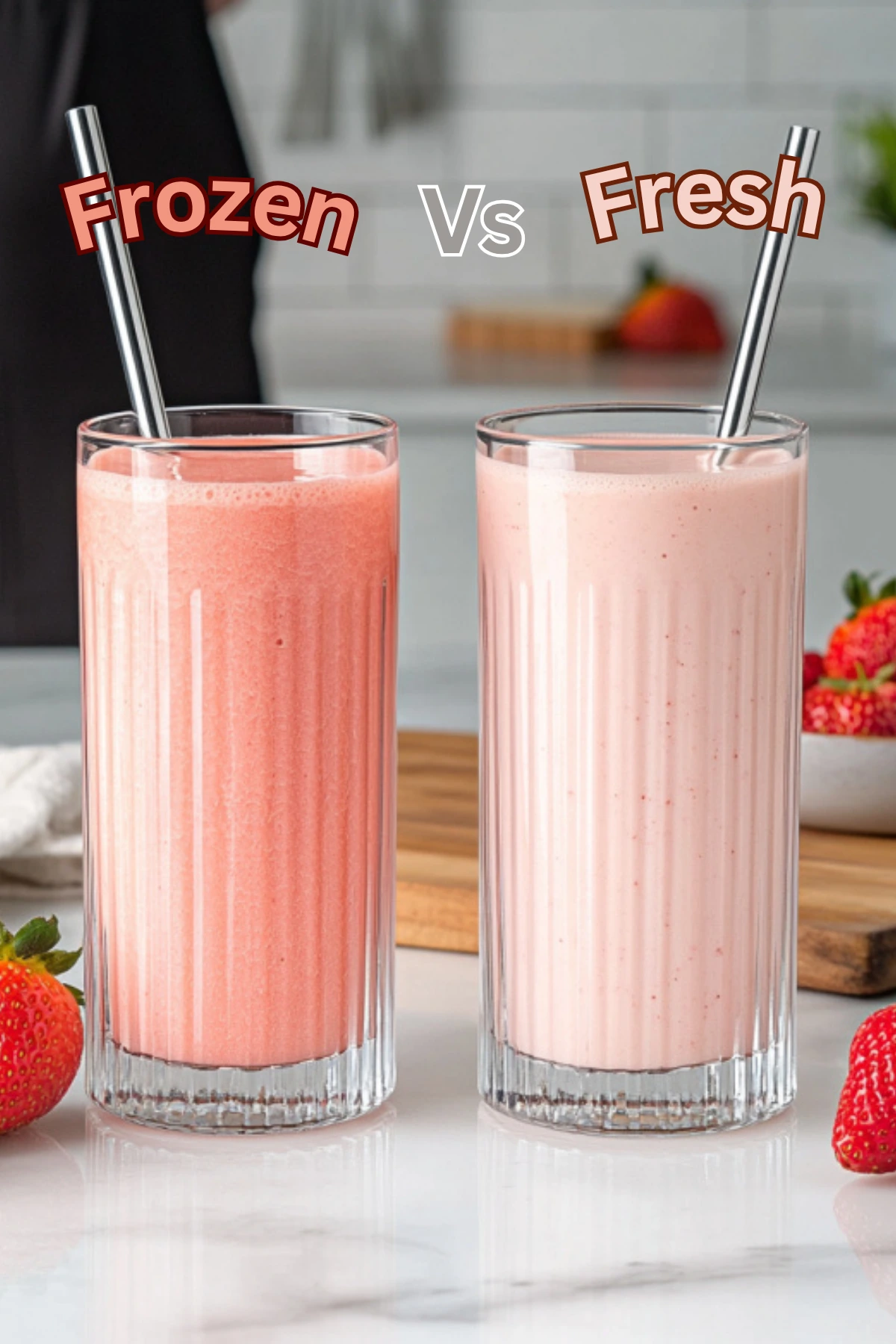
Ever wonder why smoothie shops always seem to nail that perfect thick, creamy texture while your homemade versions come out watery? The secret isn’t expensive equipment or magic ingredients – it’s frozen fruit.
I used to think fresh fruit was always better until I discovered the science behind frozen fruit in smoothies. Once you understand why ice crystals create that luxurious, almost ice cream-like consistency, you’ll never go back to watery smoothies again.
The Science Behind Frozen Fruit Smoothies
How Ice Crystals Create Creamy Texture
When fruit freezes, the water inside forms tiny ice crystals that break down the fruit’s cell walls. This might sound bad, but it’s actually perfect for smoothies! When you blend frozen fruit, those ice crystals create air pockets that get whipped into the mixture, giving you that thick, creamy texture we all crave.
Fresh fruit, on the other hand, releases liquid when blended, which can make your smoothie thin and watery – especially if you add ice to make it cold.
Why Frozen Beats Fresh Every Time
Adding ice to fresh fruit smoothies dilutes the flavor as it melts. Frozen fruit gives you that frosty temperature and thick consistency without watering down your delicious strawberry mango smoothie.
Plus, frozen fruit is often more flavorful than out-of-season fresh fruit since it’s flash-frozen at peak ripeness. You’re getting better taste AND better texture!
Equipment Impact on Texture
The right blender makes all the difference when working with frozen fruit. Even the best frozen ingredients need proper equipment to achieve that perfect creamy consistency.
Budget blenders may struggle with frozen chunks, leaving you with an uneven texture. High-powered blenders pulverize frozen fruit completely, creating that silky-smooth finish that rivals professional smoothie shops.
Ready to upgrade your blending game? See our comprehensive blender comparison for frozen fruit smoothies to find the perfect match for your needs and budget.
How to Freeze Fruit Properly
Best Practices for Frozen fruit smoothies
Wash and prep first: Clean your fruit thoroughly, remove stems, and cut larger fruits into chunks. For strawberries, remove the green tops. For mangoes, peel and cube.
Flash freeze method: Spread fruit in a single layer on a parchment-lined baking sheet. Freeze for 2-3 hours until solid, then transfer to freezer bags. This prevents fruit from clumping together.
Portion for convenience: Freeze fruit in smoothie-sized portions (about 1 cup per bag) so you can grab and blend without measuring.
Proper Storage Techniques
Use freezer bags: Remove as much air as possible to prevent freezer burn. Double-bag if you plan to store for more than 3 months.
Label everything: Include the fruit type and freeze date. Most fruits stay good for 6-12 months when properly stored.
Keep temperature steady: Store at 0°F or below. Avoid the freezer door where temperatures fluctuate.
Storage and Thaw Tips
How Long Does Frozen Fruit Last?
- Strawberries: 8-12 months for best quality
- Mangoes: 10-12 months
- Bananas: 6-8 months (peel before freezing)
- Berries: 8-10 months
Pro tip: While frozen fruit is safe indefinitely, quality starts declining after these timeframes.
When to Thaw (and When Not To)
Don’t thaw for smoothies: Use frozen fruit straight from the freezer for the best texture. Thawed fruit becomes mushy and releases too much liquid.
Partial thaw for tough blenders: If your blender struggles with frozen fruit, let it sit at room temperature for 5-10 minutes to soften slightly. For specific blender recommendations that handle frozen fruit effortlessly, check our best blenders for frozen fruit smoothies.
Thaw for baking: Completely thaw frozen fruit for muffins, pancakes, or other baked goods where you want distinct fruit pieces.
Best Fruits to Freeze First
The Smoothie Superstars
Mango chunks: Freeze beautifully and create incredibly creamy smoothies. The natural fiber content makes them perfect thickeners. They’re the star ingredient in our proven strawberry mango smoothie recipe.
Strawberries: Hold their shape well when frozen and add beautiful color. They’re also naturally less sweet than fresh, which helps balance flavors in mixed fruit smoothies.
Bananas: The ultimate smoothie thickener! Peel before freezing and break into chunks. They add natural sweetness and incredible creaminess.
Pineapple: Freezes perfectly and adds tropical flavor. Cut into chunks and remove the core first.
Fruits That Don’t Freeze Well
- Watermelon: Too watery – becomes mushy and loses flavor
- Citrus fruits: The texture becomes unpleasant, though zest freezes fine
- Grapes: Better eaten fresh or used for other purposes
Perfect Frozen Fruit Recipes
Classic Strawberry Mango Combination
This winning combination showcases exactly why frozen fruit creates superior smoothies:
Quick Recipe:
- 1 cup frozen strawberries
- 1 cup frozen mango chunks
- 1/2 cup Greek yogurt
- 1/2 cup milk
The frozen strawberries provide tartness and beautiful color, while frozen mango chunks create that signature creamy texture. For the complete step-by-step guide with perfect ratios and pro tips, follow our detailed strawberry mango smoothie recipe.
Tropical Paradise Blend
- 1 cup frozen mango
- 1/2 cup frozen pineapple
- 1/2 frozen banana
- Coconut milk
Frozen vs. Fresh: The Smoothie Showdown
Texture Comparison
Frozen fruit smoothies: Thick, creamy, spoon-able consistency that holds its shape
Fresh fruit smoothies: Thinner, more juice-like, requires ice that dilutes flavor
Flavor Benefits
Frozen advantage: Fruit is picked and frozen at peak ripeness, locking in maximum flavor
Fresh advantage: When in season and locally sourced, fresh fruit can have superior taste
Convenience Factor
Frozen wins: Always available, pre-prepped, longer shelf life, no rushing to use before spoiling
Fresh benefits: Ready to eat as-is, no planning ahead required
Best Blenders for Frozen Fruit
Not all blenders handle frozen fruit equally. Here are my top recommendations:
Budget-Friendly Option ($80-120)
Ninja Professional: Handles frozen fruit admirably for the price, though it requires patience and proper technique.
Premium Choice ($350+)
Vitamix 5200: The gold standard for frozen fruit smoothies. Creates silk-smooth texture in under 60 seconds every time.
Best Value Premium ($200-250)
Zwilling Enfinigy: 85% of Vitamix performance at a lower price point, plus it’s significantly quieter.
Want detailed performance comparisons? Our complete blender guide for frozen fruit smoothies includes real-world testing results with frozen strawberries and mango.
Pro Tips for Perfect Frozen Fruit Smoothies
Blending Techniques
Liquid first: Always add your milk, yogurt, or juice before frozen fruit. This helps the blender blades move freely.
Start slow, then high: Begin blending on low speed for 30 seconds, then increase to high. This prevents chunks from getting stuck.
Use the tamper: If your blender has a tamper, use it to push fruit toward the blades without stopping the machine.
Be patient: Let the blender run for a full 60-90 seconds for the smoothest results.
Getting the Right Consistency
Too thick? Add liquid 1 tablespoon at a time until you reach desired consistency
Too thin? Add more frozen fruit or half a frozen banana
Just right? Should coat the back of a spoon but still be drinkable
Troubleshooting Common Issues
“My Blender Can’t Handle Frozen Fruit”
Solution 1: Let fruit thaw for 5-10 minutes before blending
Solution 2: Add more liquid to help the blades move
Solution 3: Use smaller pieces of frozen fruit
Solution 4: Consider upgrading to a high-performance blender designed for frozen ingredients
Need equipment recommendations? Our blender comparison guide includes options for every budget and performance need.
“Smoothie Tastes Bland”
Frozen fruit can sometimes taste less intense than fresh. Fix this by:
- Adding a splash of fresh lemon or lime juice
- Including a pinch of salt to enhance flavors
- Using a mix of frozen and fresh fruit
- Adding natural sweeteners like honey or dates
“Fruit Clumps Together in Freezer”
Prevention: Use the flash-freeze method before storing in bags
Fix existing clumps: Bang the bag on the counter to break apart, or run briefly under cool water
Make-Ahead Smoothie Packs
Ultimate Convenience Method
What you’ll need: Freezer bags, permanent marker, measuring cups
How to prep:
- Portion out all frozen fruits for one smoothie into each bag
- Label with smoothie type and liquid requirements
- Store flat in freezer for easy stacking
- When ready, dump contents into blender and add liquids
Sample Pack Contents:
- 1 cup frozen strawberries
- 1 cup frozen mango
- 1/2 frozen banana
- Label: “Add 1/2 cup milk + 1/2 cup yogurt”
Storage time: Smoothie packs keep for up to 3 months
Ready to try this system? Use the ingredients from our proven strawberry mango smoothie recipe for foolproof results.
The Bottom Line
Frozen fruit isn’t just convenient – it’s actually superior for smoothie-making. The ice crystals create that luxurious, creamy texture that makes smoothies feel like a treat rather than a drink.
Start building your frozen fruit stash today, and you’ll always be ready to whip up a perfectly creamy smoothie in minutes. Your taste buds (and your schedule) will thank you!
Ready to Put This to the Test?
Follow our step-by-step strawberry mango smoothie guide for the perfect recipe ratios and pro techniques. You’ll taste the difference frozen fruit makes immediately!
Want the perfect equipment to match? Our comprehensive blender comparison will help you choose the right tool for consistently smooth results.
What’s your favorite frozen fruit combination? Share your go-to smoothie pack ideas in the comments below!
Don’t forget to pin this recipe to your favorite Pinterest board so you can make it again soon. Happy freezing!